Construction Site Security in Ontario: How Professional Guards Protect Your Equipment and Workforce
- By - Jaed SS
Construction sites are busy during the day and surprisingly vulnerable at night. Expensive machines sit unattended. Materials are left in open areas. Workers and contractors move in and out constantly. All of this makes construction zones a common target for theft, vandalism, and safety risks.
That is why construction site security has become a core part of project planning across Ontario. Professional guards do much more than watch entrances. They help protect equipment, manage access, support safety rules, and keep projects running without costly interruptions.
When security is effective, construction teams can focus on building rather than worrying about losses.
Why Construction Sites Need Dedicated Security
Unlike offices or retail spaces, construction environments change every day. New structures appear. Equipment moves locations. Different contractors arrive throughout the project timeline.
This constant change creates security gaps.
Without proper protection, sites face risks such as stolen machinery, trespassing, property damage, and workplace accidents. These incidents delay timelines and increase insurance claims.
Professional on-site security personnel reduce these risks by maintaining active supervision and controlling activity across the property. In growing urban areas, especially around Mississauga, many developers rely on trained construction security guards Mississauga teams to maintain order and safety.
Protecting Equipment and Materials From Theft
Heavy equipment and building materials are valuable and easy targets. Tools, copper wiring, fuel, and machinery can disappear overnight if sites are left unprotected.
Strong equipment theft prevention begins with visibility and monitoring.
Security guards patrol storage zones, monitor delivery areas, and track unusual movement. Their presence deters organised theft groups that often target unattended construction sites.
Preventing even one major theft can save thousands in replacement costs and avoid project delays.
Access Control Keeps the Site Safe and Organised
Construction sites often involve multiple subcontractors, suppliers, inspectors, and visitors. Without proper management, unauthorised individuals can enter unnoticed.
Access control for construction sites helps maintain safety and accountability.
Guards verify identification, log visitor entries, and confirm contractor authorisation before allowing access. This reduces liability and ensures only approved personnel are present on-site.
Controlled entry also helps managers track attendance and maintain compliance with workplace safety standards.
Mobile Patrols and Continuous Monitoring
Large construction areas cannot be protected from one fixed position. This is where mobile patrol for construction sites becomes essential.
Guards conduct routine patrols across perimeters, equipment yards, and partially completed structures. Patrol timing often changes to prevent predictable routines.
Combined with 24/7 construction site monitoring, patrols allow quick detection of suspicious activity, damaged fencing, or safety hazards before problems grow.
Active movement across the site sends a clear signal that the property is monitored at all times.
Construction Site Surveillance and Camera Support
Technology plays a major role in modern construction site surveillance. Security teams often work alongside installed monitoring systems to improve visibility.
Security cameras construction sites help cover blind spots and record activity after hours. Guards review footage, respond to alerts, and investigate unusual behavior in real time.
Human presence combined with surveillance technology creates stronger protection than cameras alone.
Safety Compliance and Risk Management on Site
Security is not only about preventing crime. It also supports worker safety.
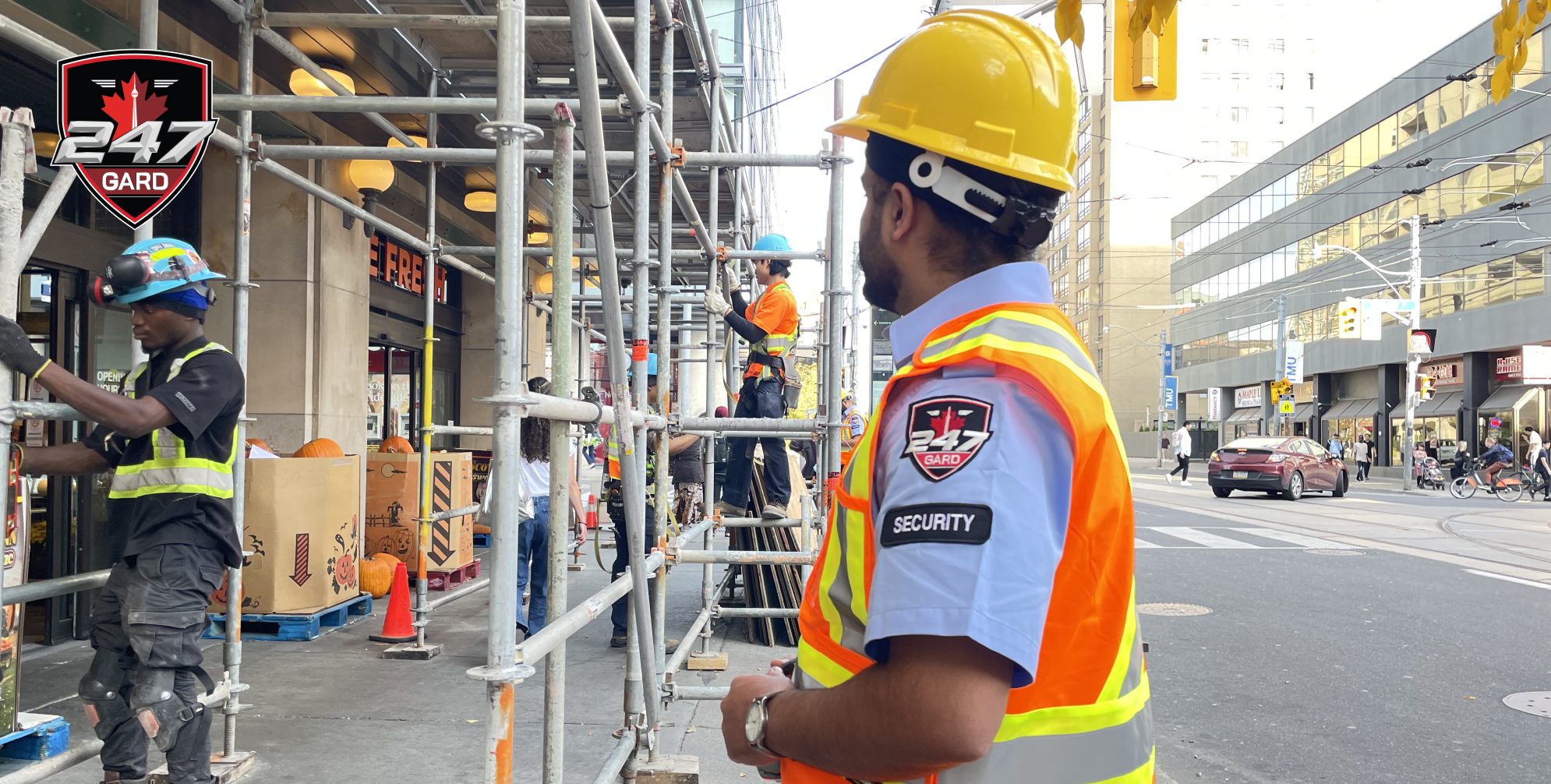
Guards help with construction site risk management by identifying hazards such as blocked exits, fire risks, or unsafe equipment storage. They remind workers about PPE requirements and act quickly during emergencies.
When incidents occur, trained personnel respond immediately while coordinating with emergency services.
This added layer of oversight helps reduce injuries and supports compliance with Ontario safety regulations.
Off-Hours Protection When Sites Are Most Vulnerable
Construction sites face the highest risk during nights, weekends, and holidays. Equipment sits idle, and fewer people are around to notice suspicious activity.
Professional guards provide overnight monitoring and routine inspections during these high-risk periods. Their presence prevents vandalism, trespassing, and unauthorized dumping.
Consistent after-hours protection helps projects stay on schedule by avoiding unexpected setbacks.
Incident Reporting That Supports Accountability
Every patrol, visitor entry, and security event is documented. Detailed reports give project managers a clear record of daily activity.
Documentation Includes:
- Visitor logs
- Incident summaries
- Safety observations
- Patrol confirmations
These records help identify patterns, improve planning, and provide legal documentation if disputes arise.
Clear reporting also strengthens communication between security teams and site managers.
Why Professional Construction Security Matters in Ontario
Ontario construction projects often operate in busy public environments. Sites attract attention, increasing the chances of trespassing or theft.
Professional guards understand local regulations and safety expectations. Their experience allows them to adapt protection strategies based on site size, location, and project stage.
Investing in construction site security helps developers reduce liability, control costs, and maintain consistent project timelines.
Security becomes part of project success, not just an added service.
Final Thought
Construction projects depend on timing, coordination, and safety. A single security incident can disrupt months of progress. With trained on-site security personnel, active monitoring, and structured risk management, construction site security helps protect both the workforce and the investment behind every project.
Frequently Asked Questions
A construction site security guard is responsible for protecting the site, equipment, materials, and workforce from theft, vandalism, and safety risks. They act as the first line of defense by monitoring daily activity and maintaining control over who enters and exits the site.
Their duties include managing access points, conducting patrols, monitoring surveillance systems, and responding to emergencies. Guards also help enforce safety rules and ensure that workers follow site regulations.
By combining visibility, supervision, and quick response, security guards help keep construction projects safe, organised, and on schedule.
Construction site security includes a combination of physical protection measures and active monitoring systems designed to reduce risks.
Key components include:
- Access control and visitor verification
- Perimeter security and fencing checks
- Mobile patrols and site inspections
- Surveillance monitoring with security cameras
- Incident reporting and documentation
- 24/7 construction site monitoring
This layered approach ensures full coverage of the site, protecting both equipment and workers at all times.
Security guards prevent theft through a mix of deterrence, monitoring, and control. Their visible presence alone discourages criminals from targeting the site.
They patrol storage areas, monitor high-value equipment, and oversee deliveries to detect suspicious activity. Guards also control access points to ensure only authorized individuals enter the site.
During high-risk periods such as nights and weekends, guards provide continuous monitoring to protect materials like copper, tools, and machinery from organized theft.
This proactive approach significantly reduces the chances of financial loss and project delays.
Access control is essential because construction sites involve multiple workers, contractors, and visitors moving in and out daily. Without proper control, unauthorized individuals can easily enter the site.
Security guards verify identification, log visitor details, and ensure only approved personnel gain access. This helps prevent theft, reduces liability, and improves accountability.
Controlled access also supports compliance with workplace safety regulations by ensuring that everyone on-site is authorized and trained for the environment.
Protecting equipment and materials requires a combination of physical and operational security measures.
Effective strategies include:
- Secure fencing and controlled entry points
- Regular perimeter and mobile patrols
- Surveillance cameras for continuous monitoring
- Proper storage and restricted access to high-value items
- On-site guards during off-hours and weekends
These measures work together to create a strong defense system that minimizes theft, vandalism, and damage.
Construction site security supports safety by identifying hazards and ensuring workers follow safety protocols. Guards monitor for risks such as blocked exits, fire hazards, or unsafe equipment handling.
They also assist during emergencies by guiding evacuations and coordinating with emergency services.
In Ontario, security teams help maintain compliance with safety regulations and insurance requirements by documenting incidents, maintaining reports, and ensuring proper site management.
This reduces workplace injuries and protects companies from legal and financial risks.
Construction sites are most vulnerable during nights, weekends, and holidays when activity is low and equipment is unattended.
24/7 construction site monitoring ensures continuous protection through active surveillance and on-site security presence. Guards can quickly detect and respond to suspicious behavior, fence breaches, or safety issues before they escalate.
This constant monitoring prevents vandalism, unauthorized access, and material theft while keeping projects on track and avoiding costly delays.